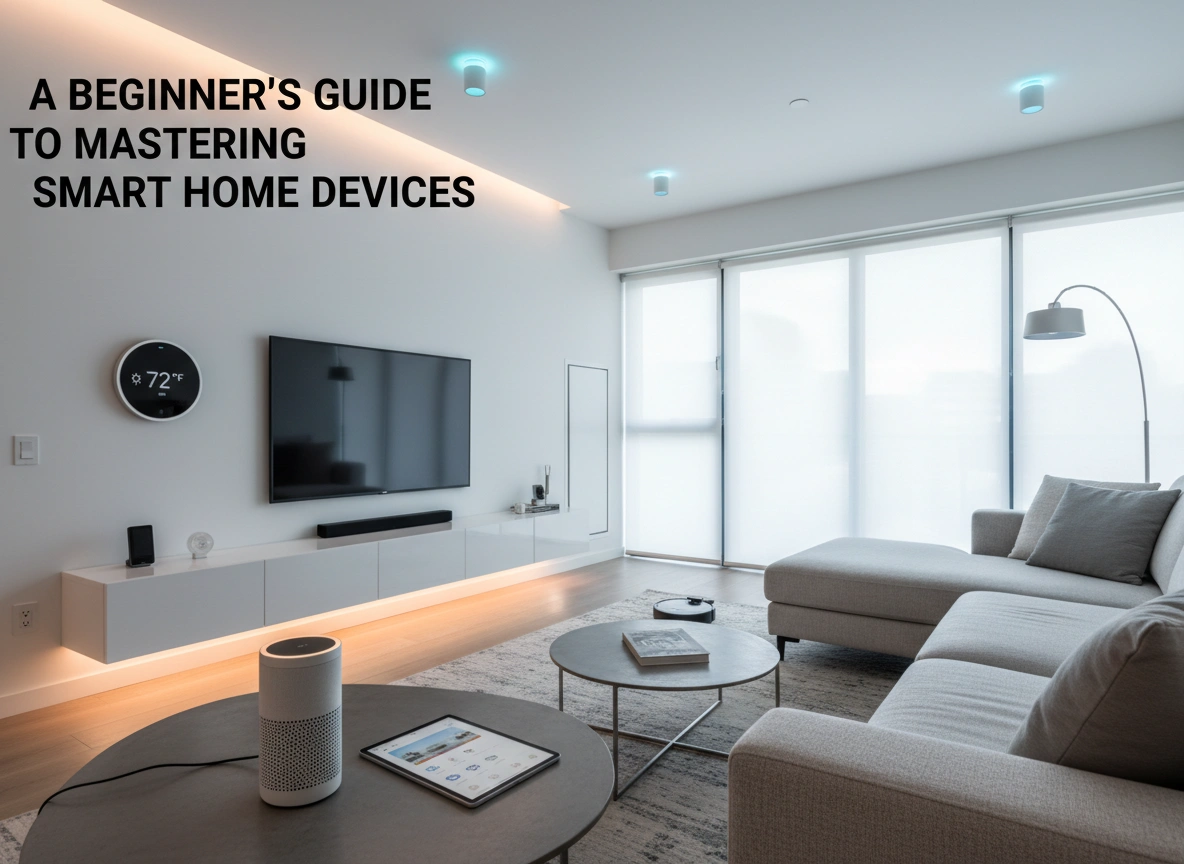
Stepping into the world of smart home technology can feel like exploring a new frontier. With devices that can control your lights, temperature, and security with just a simple voice command, the promise of a more connected and convenient home is compelling. This guide will walk you through everything you need to know to start building and mastering your own smart home. We’ll cover what these devices are, how to choose them, and how to make them all work together seamlessly.
What Are Smart Home Devices?
At their core, smart home devices are everyday objects made “smart” by connecting them to the internet. This connectivity, often called the Internet of Things (IoT), allows you to control and automate them remotely using a smartphone, tablet, or smart speaker. The benefits go far beyond simple convenience.
Smart homes offer enhanced security through connected cameras and locks, improved energy efficiency with smart thermostats and lighting, and a higher level of comfort and accessibility. Imagine your lights turning on automatically as you arrive home, your thermostat adjusting to save energy while you’re away, or your coffee maker starting before you even get out of bed. This is the power of a well-integrated smart home.
Key Categories of Smart Home Devices
The smart home ecosystem is vast and growing. Understanding the main categories can help you decide where to start.
Smart Speakers and Hubs
These are often the central command center of a smart home. Devices like the Amazon Echo (with Alexa), Google Nest Hub (with Google Assistant), and Apple HomePod (with Siri) act as voice-controlled assistants. You can ask them to play music, answer questions, set timers, and, most importantly, control other compatible smart devices in your home. Some devices also function as hubs, which help different devices from various brands communicate with each other.
Smart Lighting
Smart lighting is one of the easiest and most impactful entry points into home automation. You can replace your existing light bulbs with smart bulbs or install smart switches. This allows you to control brightness, color, and schedules from your phone. You can create “scenes” for different activities, like a “movie night” scene that dims the lights or a “wake-up” scene that gradually brightens them in the morning.
Smart Thermostats
A smart thermostat learns your heating and cooling preferences and creates an automatic schedule to match your lifestyle. Models from companies like Nest and Ecobee can detect when you’re home or away, adjusting the temperature to save energy and money without sacrificing comfort. You can also control them remotely, so you can warm up the house on your way home from work on a cold day.
Smart Security
This category includes a wide range of devices designed to keep your home safe.
- Smart Security Cameras: These let you view a live feed of your home from anywhere. Many offer features like motion detection, night vision, and two-way audio.
- Video Doorbells: See and speak to whoever is at your front door, whether you’re on the couch or across the country.
- Smart Locks: Grant access to your home remotely, lock or unlock your door with your phone, and receive alerts about who is coming and going.
Smart Plugs
One of the simplest and most affordable smart devices, a smart plug can turn almost any standard appliance into a smart one. Just plug it into an outlet, then plug your device—like a lamp, fan, or coffee maker—into the smart plug. You can then turn the appliance on or off from your phone or set it on a schedule.
How to Choose the Right Devices for Your Needs
Building a smart home isn’t about buying every gadget available. It’s about solving real problems and making your life easier.
Start with Your Pain Points
What daily inconveniences do you want to solve?
- Do you worry about whether you locked the front door? A smart lock could provide peace of mind.
- Are your energy bills too high? A smart thermostat might be a great investment.
- Do you fumble for light switches in the dark? Smart lighting can solve that.
Focusing on your specific needs will help you make purposeful purchases instead of getting lost in the technology.
Consider the Ecosystem
The most popular smart home ecosystems are Amazon Alexa, Google Home, and Apple HomeKit. While many devices work with all three, some are exclusive to one. Choosing an ecosystem first can simplify your purchasing decisions later. If you already use and love your iPhone, Apple HomeKit might be a natural fit. If you’re an avid Android user, Google Home is a strong contender. Think about which voice assistant you prefer and which interface feels most intuitive to you.
Check for Compatibility
Before buying a new device, always check if it’s compatible with your existing setup and chosen ecosystem. Look for labels like “Works with Alexa,” “Works with Google Assistant,” or “Works with Apple HomeKit” on the packaging. This ensures your devices can communicate and you can control them all from a single app or voice assistant.
Tips for Setting Up and Integrating Your Devices
Once you have your devices, the next step is getting them to work together.
Follow the Instructions
This may sound obvious, but each device has a unique setup process. Most involve downloading the manufacturer’s app, creating an account, and connecting the device to your Wi-Fi network. Take your time and follow the step-by-step guides provided.
Name Your Devices Logically
When you add a device in its app, give it a clear and simple name. For example, instead of “Philips Hue Bulb 1,” name it “Living Room Lamp.” This makes controlling it with voice commands much more natural. You’ll be able to say, “Hey Google, turn on the living room lamp,” without having to remember a complicated device name.
Create Groups and Rooms
Most smart home apps allow you to group devices into rooms. For instance, you can put all the smart lights in your bedroom into a “Bedroom” group. This lets you control them all at once with a command like, “Alexa, turn off the bedroom lights.”
Build Routines and Automations
This is where the magic really happens. Routines are custom commands that trigger a series of actions across multiple devices. For example, you could create a “Good Morning” routine that:
- Slowly brightens your bedroom lights.
- Starts playing your favorite morning playlist on a smart speaker.
- Turns on the smart plug connected to your coffee maker.
Setting up these automations takes your smart home from a collection of remote-controlled gadgets to a truly intelligent and responsive environment.
Common Challenges and How to Overcome Them
Even the best technology can have its hiccups. Here are some common issues and their solutions.
Wi-Fi Connectivity Issues
A strong and stable Wi-Fi network is the backbone of any smart home. If your devices frequently go offline or are slow to respond, your Wi-Fi signal may be the culprit.
- Solution: Consider upgrading to a modern router or installing a mesh Wi-Fi system. A mesh system uses multiple nodes placed around your house to ensure strong, consistent coverage in every room, eliminating dead zones.
Device Incompatibility
You might buy a device only to find it doesn’t work with your current ecosystem.
- Solution: Research is key. Before purchasing, double-check compatibility. If you already have incompatible devices, look into third-party services like IFTTT (If This Then That), which can create bridges between products that don’t natively support each other.
Privacy and Security Concerns
Bringing internet-connected devices into your home naturally raises questions about privacy and security.
- Solution: Be proactive. Use strong, unique passwords for every smart home account. Enable two-factor authentication (2FA) whenever possible. Regularly update your device firmware, as updates often include critical security patches. Finally, review the privacy settings in each device’s app and limit data sharing where you can.
The Future of Smart Home Technology
The smart home is still evolving. The introduction of Matter—a new, universal connectivity standard—is set to make device compatibility issues a thing of the past. In the future, you’ll be able to buy any Matter-certified device and know it will work with your chosen ecosystem.
We can also expect artificial intelligence (AI) to play an even bigger role. Homes will become more predictive, anticipating your needs without requiring a command. Your house might learn that you like the temperature cooler at night or that you prefer dimmer lights in the evening and adjust automatically. This proactive assistance will make our homes more comfortable, efficient, and truly seamless extensions of our lives.
Please visit website for more info.
