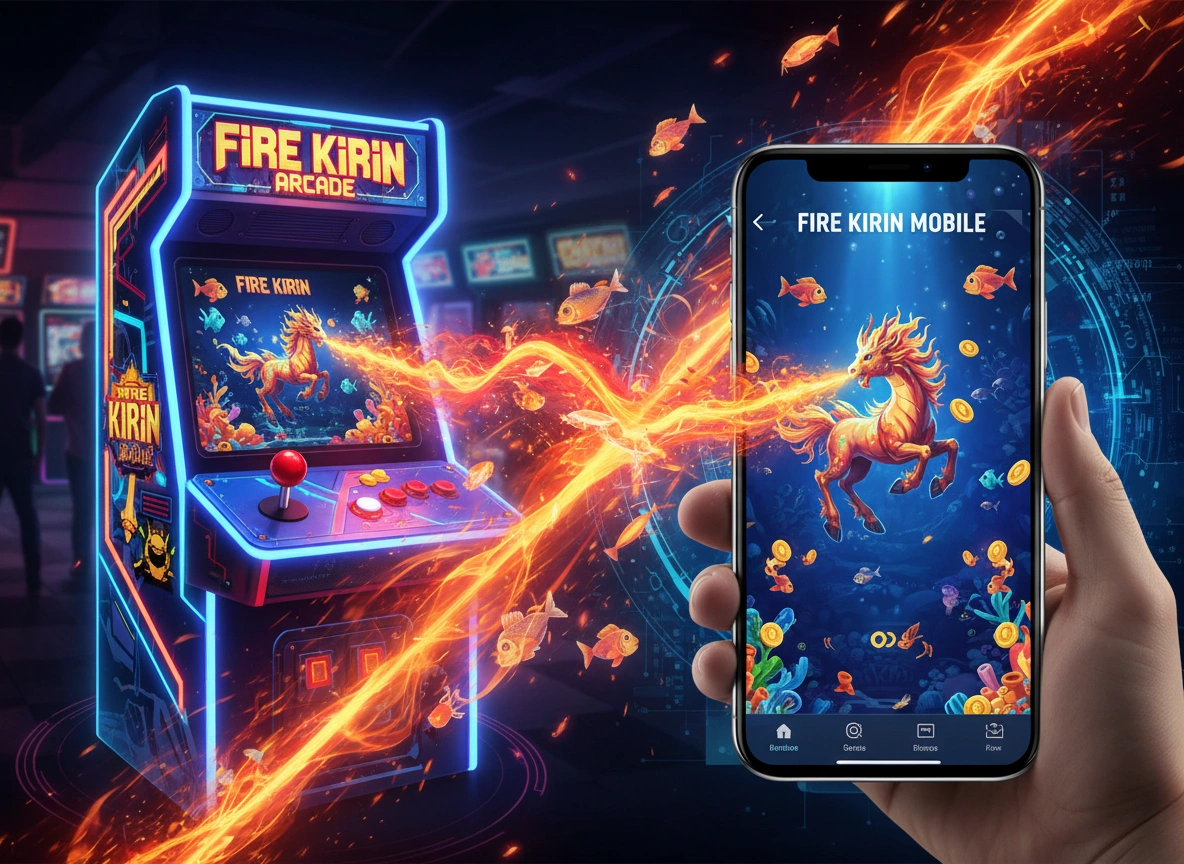
Remember the bright lights and the loud, overlapping sounds of the local arcade? For years, gamers gathered around massive cabinets to test their reflexes and luck. Among the most popular attractions in these gaming hubs were “fish table” games. You would drop in a coin, grab a joystick, and try to catch as many high-value aquatic creatures as possible. Fire Kirin stood out as an undisputed favorite in this crowded space.
But as hardware improved and smartphones became ubiquitous, the gaming landscape shifted. Fire Kirin did not just survive this shift; it thrived. The developers took a massive, multiplayer physical arcade machine and squeezed it into a device that fits in your pocket.
This post explores the journey of Fire Kirin from traditional arcade rooms to the mobile gaming screens of millions. You will learn about its origins, the technology that drove its transition, the upgraded features of the mobile version, and what this evolution means for the future of the gaming industry.
The Arcade Origins of Fire Kirin
Before anyone could download an app, Fire Kirin existed as a physical arcade machine. It belongs to a genre known as “fish shooters” or “fish table games.” These large, horizontal screens accommodated multiple players at once.
The Allure of the Fish Table
If you walked into a gaming center a decade ago, you would easily spot a fish table. Players stood shoulder-to-shoulder, intensely focused on a shared screen. The objective was simple but highly addictive: use a mounted cannon to shoot nets or lasers at digital fish swimming across the screen.
Different fish required different amounts of ammunition to catch, and they offered varying payouts. The “Fire Kirin” itself—a mythical, fiery beast—was the ultimate prize. Taking it down required coordination, heavy firepower, and a bit of luck. The physical buttons and joysticks gave players tangible feedback, making every shot feel impactful.
Social Dynamics in Physical Arcades
The original Fire Kirin arcade experience was inherently social. Players cheered each other on, groaned over near-misses, and sometimes competed fiercely for the same high-value target. You could see your competitors right next to you. This real-life interaction created a community atmosphere that kept players coming back to the arcade week after week.
However, this setup had its limits. You had to travel to a specific location, wait for an open spot at the table, and operate within the business hours of the venue.
The Shift to Mobile Gaming
As mobile technology advanced, game developers recognized a massive opportunity. People were spending more time on their smartphones than ever before. Bringing Fire Kirin to mobile platforms was a logical, albeit challenging, next step.
Technological Drivers of the Transition
Moving a multiplayer arcade game to a mobile app required significant technological leaps. Early smartphones lacked the processing power to handle the chaotic, fast-paced graphics of a fish shooter.
However, as mobile processors became more powerful, developers could recreate the vibrant underwater worlds without sacrificing frame rates. High-speed internet and the rollout of 4G and 5G networks solved the multiplayer issue. Suddenly, a game that relied on instantaneous, simultaneous actions from multiple players could run seamlessly over a cellular connection. Cloud servers replaced the heavy physical cabinets, syncing player actions in real-time across the globe.
Breaking Geographic Barriers
The transition to mobile completely removed geographic and physical constraints. You no longer needed to find a local arcade that housed a Fire Kirin table. You just needed a smartphone and an internet connection. This accessibility exposed the game to a massive global audience. A player in a rural town could now compete against someone in a bustling metropolis.
Mobile vs. Arcade: Upgraded Features
The developers did not just copy and paste the arcade version onto a mobile screen. They used the capabilities of modern smartphones to enhance the gameplay, adding new features that physical machines could not support.
Enhanced Graphics and User Interface
Arcade screens were large, but they often suffered from glare and limited viewing angles. Mobile screens, particularly modern OLED displays, offer incredible color accuracy and sharpness. The mobile version of Fire Kirin features updated character models, smoother animations, and vibrant particle effects when you capture a creature.
The user interface also received a massive overhaul. Instead of physical buttons, players use intuitive touch controls. You can tap exactly where you want to shoot, offering a level of precision that a joystick simply cannot match.
Cross-Platform Play and Global Leaderboards
The mobile version introduced robust networking features. You can now form private rooms with your friends, regardless of where they live. Furthermore, the game features global leaderboards. In the arcade, you only competed against the people in the room. Now, you can see how your skills stack up against millions of players worldwide.
Advanced Weaponry and Bonus Rounds
To keep the mobile experience fresh, developers added an array of new weapons and power-ups. The mobile app features automated targeting systems, screen-clearing bombs, and multiplier bonuses that were absent in the original arcade cabinets.
Mobile players also enjoy daily login bonuses, seasonal events, and special mini-games. These elements leverage the habit-forming nature of mobile apps, ensuring that players always have a reason to open the game.
Impact on Player Engagement and the Industry
The successful migration of Fire Kirin from physical to digital has had a profound impact on how players engage with sweepstakes and casual games.
Accessibility and 24/7 Gaming
The most significant change is the shift to 24/7 availability. Arcade gaming was an event; mobile gaming is a constant companion. Players can launch Fire Kirin during their commute, on their lunch break, or late at night. This ease of access has skyrocketed player engagement metrics.
By removing the friction of traveling to an arcade, the game captures shorter, more frequent bursts of playtime. This micro-gaming model generates consistent daily active users, a metric that digital game publishers highly value.
Shaping the Casual Sweepstakes Market
Fire Kirin’s success paved the way for an entire subgenre of mobile games. It proved that complex, multiplayer arcade games could translate beautifully to touchscreens. Other developers quickly followed suit, creating a boom in mobile fish table games.
Furthermore, it helped normalize the digital sweepstakes model. Players purchase in-game currency to play, and they can often redeem their winnings through secure digital payment systems. This seamless integration of gameplay and rewards has influenced countless other apps in the casual gaming sector.
The Future of Fire Kirin and Fish Table Games
As we look ahead, the evolution of Fire Kirin is far from over. The mobile gaming landscape continues to shift, and hardware keeps improving.
We can expect to see deeper integrations of social features. Voice chat, live streaming integration, and virtual guilds will likely become standard. There is also the potential for augmented reality (AR) and virtual reality (VR) adaptations. Imagine putting on a VR headset and feeling like you are sitting at a massive, futuristic fish table with your friends, combining the immersion of the physical arcade with the convenience of digital play.
Artificial intelligence will also play a role. AI could dynamically adjust the difficulty of the fish based on a player’s skill level, ensuring that the game remains challenging but fair.
Conclusion
The journey of Fire Kirin is a perfect case study in technological adaptation. It began as a bulky, localized arcade machine and transformed into a sleek, globally accessible mobile app. By leveraging better processors, faster internet, and intuitive touch controls, developers managed to capture the magic of the original game while expanding its reach exponentially.
The transition brought enhanced graphics, new gameplay mechanics, and unprecedented accessibility. It changed how players interact with fish table games and set a new standard for the mobile sweepstakes industry.
If you want to experience this evolution firsthand, check your device’s app store to see the latest iterations of fish table games. For game developers, the success of Fire Kirin serves as a reminder: classic gameplay mechanics never go out of style; they just need the right platform to reach their full potential.
