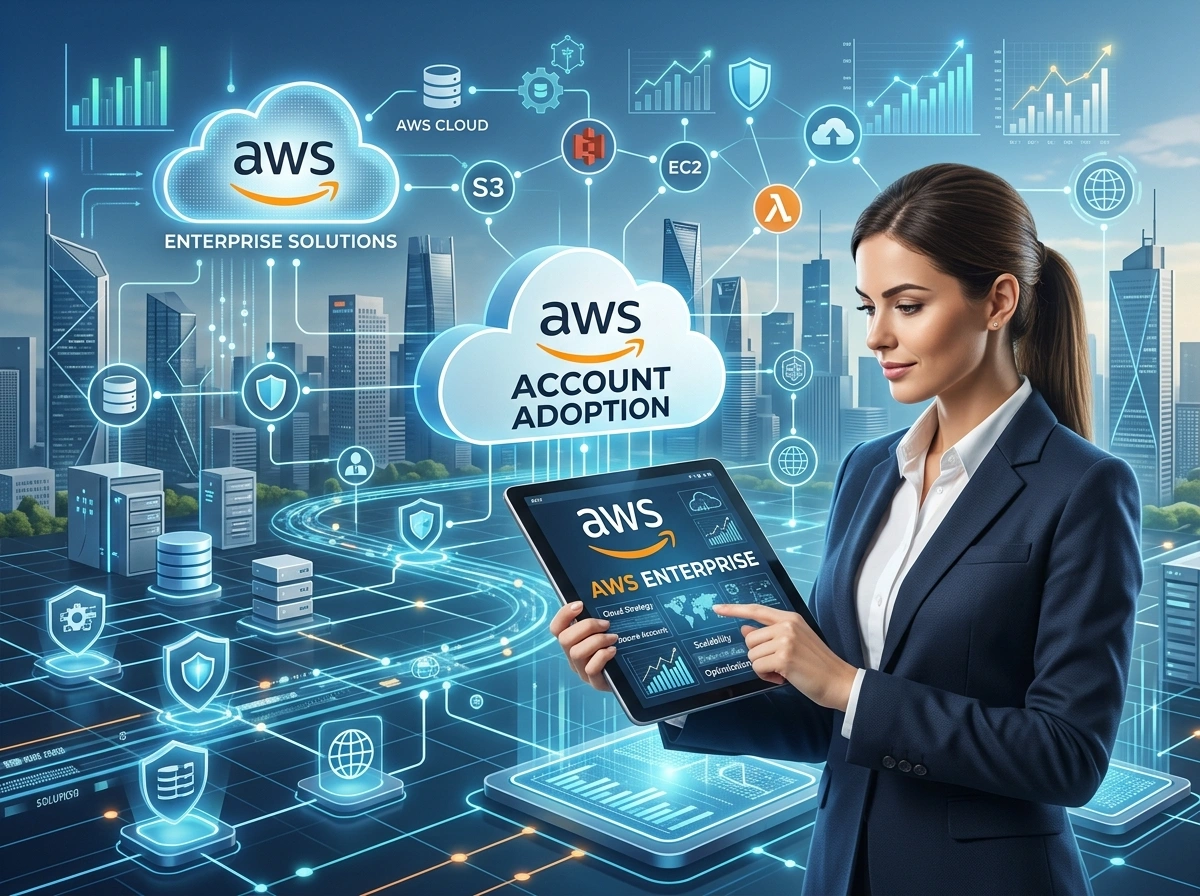
The migration to cloud infrastructure has fundamentally transformed how large organizations operate, innovate, and deliver value to their customers. Instead of managing cumbersome physical data centers, forward-thinking companies rely on cloud providers to host their most critical applications and data. Among these providers, Amazon Web Services (AWS) remains a dominant force, offering an expansive suite of tools designed to handle enterprise-level workloads.
Acquiring and configuring enterprise-grade Amazon AWS accounts is an essential step for organizations looking to modernize their technical foundation. A well-structured AWS environment provides the necessary infrastructure to support rapid growth, complex data analytics, and seamless global collaboration. Enterprises that strategically invest in AWS accounts position themselves to respond effectively to market changes, outpace competitors, and deliver reliable digital experiences.
Understanding the specific advantages of these cloud accounts helps IT leaders and executives make informed decisions about their technical investments. This guide explores the core benefits of securing Amazon AWS accounts, detailing how they improve scalability, optimize costs, enforce strict security measures, and support international business operations.
Scalability and Flexibility Benefits
One of the primary reasons enterprises invest in AWS accounts is the unparalleled scalability the platform offers. Traditional IT infrastructure requires organizations to estimate their maximum potential server load and purchase hardware accordingly. This approach often leads to expensive, underutilized servers during normal operations or catastrophic system crashes during unexpected traffic spikes.
Adapting to Traffic Demands
AWS eliminates the guesswork of hardware provisioning. With services like Amazon Elastic Compute Cloud (EC2) and Auto Scaling, your infrastructure automatically adjusts to match current demand. When a marketing campaign drives a massive influx of users to your application, AWS provisions additional servers in real-time to handle the load. As traffic subsides, the system scales down, ensuring smooth performance without manual intervention.
Supporting Diverse Workloads
Flexibility extends beyond simply adding or removing servers. AWS provides specialized services tailored to almost any technological requirement. From machine learning models and serverless computing to relational databases and data warehousing, an AWS account grants your engineering team access to a vast ecosystem of tools. This flexibility empowers developers to choose the exact right technology for the task at hand, fostering innovation and accelerating product development cycles.
Cost-Efficiency and Resource Management
Managing enterprise finances requires strict oversight of operational expenditures. AWS offers a highly transparent and adaptable pricing model that directly aligns IT costs with actual usage.
Shifting from CapEx to OpEx
Buying into the AWS ecosystem allows enterprises to transition from a capital expenditure (CapEx) model to an operational expenditure (OpEx) model. You no longer need to heavily invest upfront in physical hardware that depreciates over time. Instead, you pay exclusively for the compute power, storage, and networking resources your organization actively consumes. This financial flexibility frees up capital that can be redirected toward strategic growth initiatives, research, and development.
Advanced Cost Tracking Tools
Enterprise AWS accounts come equipped with sophisticated financial management tools. AWS Cost Explorer and AWS Budgets allow finance and IT teams to visualize spending patterns, forecast future costs, and set automated alerts when expenses exceed predefined thresholds. By utilizing resource tagging, organizations can attribute specific costs to individual departments, projects, or applications. This granular visibility promotes accountability across the organization and makes it significantly easier to identify areas where infrastructure can be optimized to reduce waste.
Enhancing Security and Compliance
Protecting sensitive corporate data and customer information is a top priority for any enterprise. Security breaches can result in severe financial penalties, legal repercussions, and irreversible damage to brand reputation. Amazon AWS provides a highly secure foundation built to satisfy the requirements of the world’s most risk-sensitive organizations.
The Shared Responsibility Model
Security in the cloud operates under a shared responsibility model. AWS secures the underlying physical infrastructure, network, and hypervisors. The enterprise is then responsible for securing the data and applications they deploy within their accounts. To facilitate this, AWS provides robust tools like AWS Identity and Access Management (IAM), which allows administrators to enforce the principle of least privilege. Users only receive the specific permissions necessary to perform their job functions, severely limiting the potential impact of compromised credentials.
Meeting Stringent Compliance Standards
Navigating complex regulatory environments is a major challenge for global enterprises. AWS maintains a comprehensive compliance program, ensuring its infrastructure meets the standards of frameworks such as HIPAA, GDPR, SOC 2, and PCI DSS. By building applications within a certified AWS environment, enterprises inherit a significant portion of these compliance controls. This dramatically reduces the time, effort, and expense required to pass audits and maintain industry certifications, giving legal and compliance teams peace of mind.
Streamlining Global Operations
Modern enterprises rarely operate within a single geographic location. Supporting distributed workforces and serving an international customer base requires an IT infrastructure with a truly global footprint.
Leveraging Global Infrastructure
An enterprise AWS account provides immediate access to Amazon’s massive network of geographic Regions and Availability Zones. Instead of routing all international traffic to a centralized data center in one country, companies can deploy their applications and databases in regions closest to their end users. This strategic placement drastically reduces latency, ensuring that software performs rapidly and reliably regardless of where the user is located.
Facilitating Disaster Recovery
Global reach also plays a critical role in enterprise business continuity and disaster recovery planning. By replicating data and application architectures across multiple geographic regions, organizations can ensure high availability. If a natural disaster or localized outage affects one region, automated failover mechanisms can instantly redirect traffic to a healthy region. This resilience minimizes downtime, protects revenue streams, and maintains continuous service availability during unforeseen disruptions.
The Strategic Advantage of Multiple AWS Accounts
As enterprises mature in their cloud journey, relying on a single AWS account often becomes restrictive. A highly recommended best practice is the strategic acquisition and provisioning of multiple AWS accounts managed under a central organizational structure.
Isolating Environments and Workloads
Using multiple AWS accounts allows enterprises to create strict boundaries between different stages of the software development lifecycle. By maintaining entirely separate accounts for development, testing, and production environments, you prevent experimental code from accidentally impacting live customer-facing systems. This isolation also extends to different business units or subsidiaries, ensuring that the resources of one department do not interfere with another.
Minimizing the Blast Radius
Security incidents are a reality of the digital landscape. Structuring your enterprise infrastructure across multiple AWS accounts acts as a powerful containment strategy. If a bad actor manages to compromise a specific account, the damage is isolated entirely within that environment. They cannot easily pivot to access critical databases or services hosted in a separate, secure account. This architectural approach, often managed via AWS Organizations, provides centralized billing and policy enforcement while maintaining decentralized, highly secure operational environments.
A Strategic Move for Modern IT Architecture
Migrating to and expanding within the cloud requires deliberate planning and the right structural foundation. Investing in enterprise Amazon AWS accounts equips organizations with the robust tools needed to manage massive scale, optimize financial resources, and maintain airtight security protocols.
The transition to a multi-account cloud strategy empowers engineering teams to innovate rapidly while giving leadership the financial and security oversight necessary to protect the business. Organizations ready to modernize their infrastructure should evaluate their current cloud footprint, establish a central governance strategy, and begin structuring their AWS environments to support the next decade of digital growth.
Please visit website for more info.
