Not all replicas are created equal. Some fall apart after a few weeks, while others mirror the original so closely that only a trained eye can tell the difference. If you’re considering a replica Rolex, knowing what separates a cheap knockoff from a premium reproduction can save you money and disappointment.
This guide walks you through the seven details that matter most when judging quality. By the end, you’ll know exactly where to look, what to feel for, and which giveaways expose a poorly made piece. Whether you’re a collector, a hobbyist, or simply curious, these checkpoints will sharpen your eye and help you make a smarter decision.
Let’s get into the specifics.
1. Weight and Heft in the Hand
A genuine Rolex feels substantial because of its solid stainless steel, 904L alloy, or precious metal construction. The same logic applies to high-quality replicas. The best reproductions use heavier steel and properly weighted components, so the watch sits with real presence on your wrist.
Pick it up. A premium replica should feel dense and balanced, not hollow or plasticky. Lightweight pieces almost always signal cut corners in materials. When you hold a well-made version, the bracelet, case, and clasp should all contribute to a confident, even weight.
The takeaway: cheap fakes feel like toys, while quality reproductions feel like the real thing.
2. Dial Printing and Text Sharpness
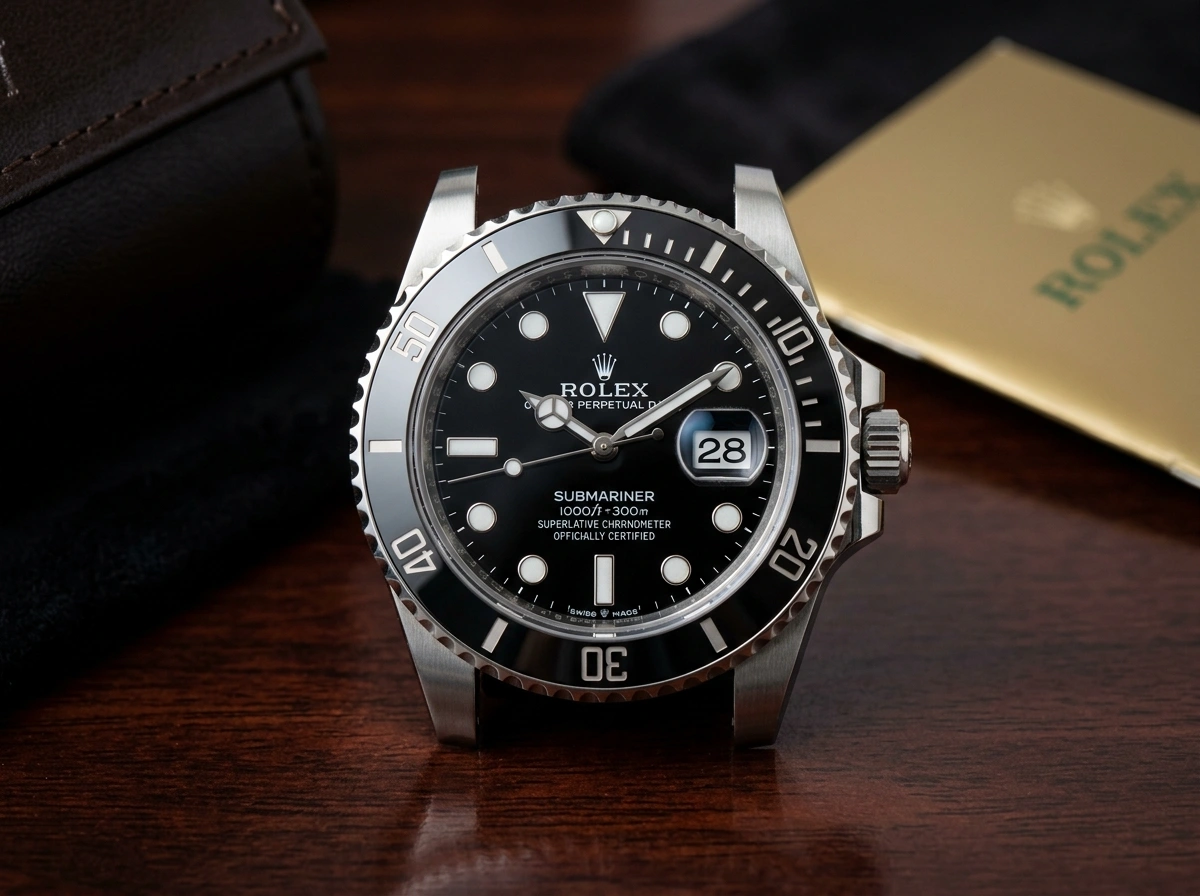
The dial is where most low-grade replicas fail. Authentic Rolex dials feature crisp, perfectly aligned printing with no smudging, bleeding, or uneven spacing. Look closely at the lettering, especially the small “Rolex” text beneath the crown logo and the model name above six o’clock.
Use a loupe or your phone’s zoom function. On a high-quality piece, the font is razor-sharp and consistent. On a poor one, you’ll spot blurry edges, thin paint, or letters that sit slightly off-center. The coronet logo should be cleanly defined, with five evenly shaped points.
Pay attention to the date window too. The number should be centered under the magnifying Cyclops lens, not crooked or floating awkwardly to one side.
3. The Cyclops Magnification
Speaking of the Cyclops, this small lens over the date is a classic giveaway. A real Rolex Cyclops magnifies the date by roughly 2.5 times, making it easy to read at a glance. Many budget replicas use weak magnification, leaving the date looking small and distant.
Tilt the watch under good lighting. The date should fill most of the Cyclops bubble and appear bold and clear. If the number looks tiny or barely enlarged, the lens quality isn’t up to standard.
Quality matters here because the Cyclops is one of the first things experienced eyes check.
4. Movement and Second-Hand Sweep
The movement powers everything, and it reveals a lot about build quality. Genuine Rolex watches use automatic mechanical movements that produce a smooth, almost continuous sweep of the second hand. Cheaper replicas often rely on quartz movements that tick once per second in a stuttering motion.
Watch the second hand carefully for ten seconds. A high-quality automatic replica glides fluidly around the dial. A ticking, jerky motion is an instant red flag for lower-grade construction.
The best reproductions, like those reviewed at replica rolex, focus heavily on accurate movements because serious buyers expect that smooth sweep. A reliable movement also affects timekeeping and long-term durability, so this detail is worth more than a quick glance.
5. Bracelet, Links, and Clasp Quality
A Rolex bracelet is engineered with tight tolerances, solid links, and a precise clasp that opens and closes with a satisfying click. Run your fingers along the bracelet of a quality replica. The links should feel solid, not hollow, and there should be minimal rattle when you shake the watch.
Examine the clasp closely. Genuine Rolex clasps feature engraved logos, clean machining, and smooth operation. On premium replicas, the clasp engraving is sharp and the mechanism feels secure. On weaker versions, the clasp may feel flimsy, misaligned, or stamped with shallow, fuzzy logos.
Don’t overlook the end links where the bracelet meets the case. They should fit flush, with no awkward gaps.
6. Engravings and Serial Numbers
Modern Rolex watches include fine engravings that are difficult to replicate well. Look for the laser-etched coronet on the crystal at the six o’clock position, plus the rehaut engraving, which is the inner ring around the dial that displays “ROLEX” repeated with a serial number.
On a high-quality replica, these engravings are deep, even, and properly aligned. On a poor one, the rehaut text may be shallow, crooked, or missing entirely. The tiny crystal etching is especially tough to fake, so check whether it’s present and cleanly executed.
Serial and model numbers between the lugs should also be precisely engraved, not lightly scratched in. Crisp, diamond-cut engravings point to a careful manufacturer.
7. Crown Logo and Winding Feel
The crown is more than decoration. On a real Rolex, the screw-down crown winds smoothly and seals tightly against the case. The Triplock or Twinlock system gives a firm, deliberate feel as you screw it in.
Test the crown on any replica you inspect. It should thread cleanly without grinding or slipping. When you wind the watch, the action should feel controlled, not loose or gritty. The coronet logo on the crown itself should be sharply detailed, with no blurred edges.
A smooth, well-sealed crown is a strong sign of careful assembly. A wobbly or rough one suggests the maker rushed the finishing work.
Bringing It All Together
Spotting a high-quality replica comes down to attention to detail. The best reproductions get the small things right: a solid weight, sharp dial printing, a strong Cyclops, a smooth second-hand sweep, a precise bracelet, clean engravings, and a confident crown. Cheap fakes stumble on these points, and once you know what to look for, the differences become obvious.
Before you commit to any purchase, run through this seven-point checklist. Hold the watch, study the dial, watch the movement, and feel the bracelet. Each detail tells you something about the craftsmanship behind the piece.
In the end, an informed buyer always comes out ahead. Use these inspection tips to separate the impressive reproductions from the disappointing ones, and you’ll choose with confidence every time.
